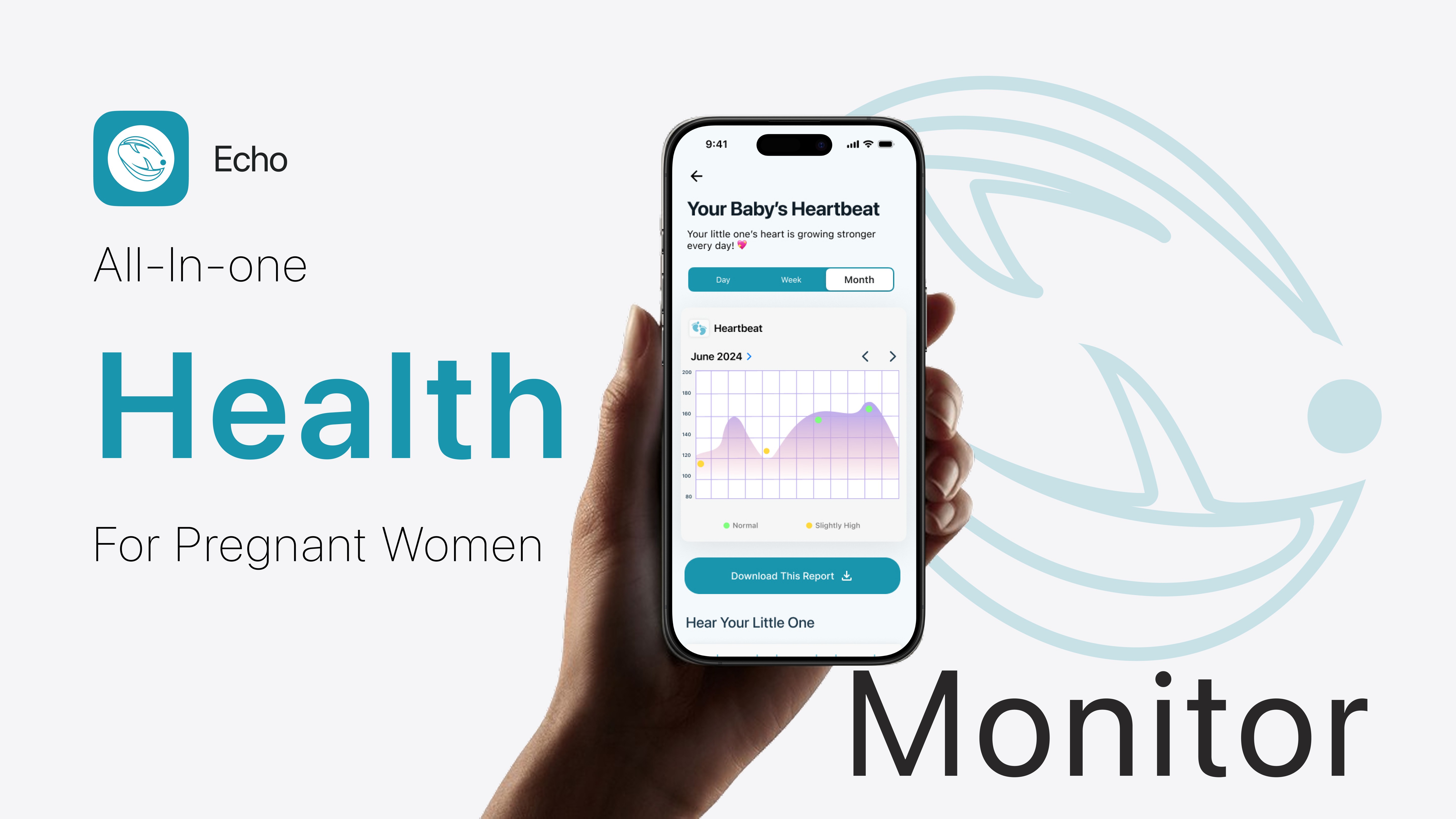
Phygital Healthcare Product
Simplifying High-Risk Pregnancy Monitoring
The Big Picture
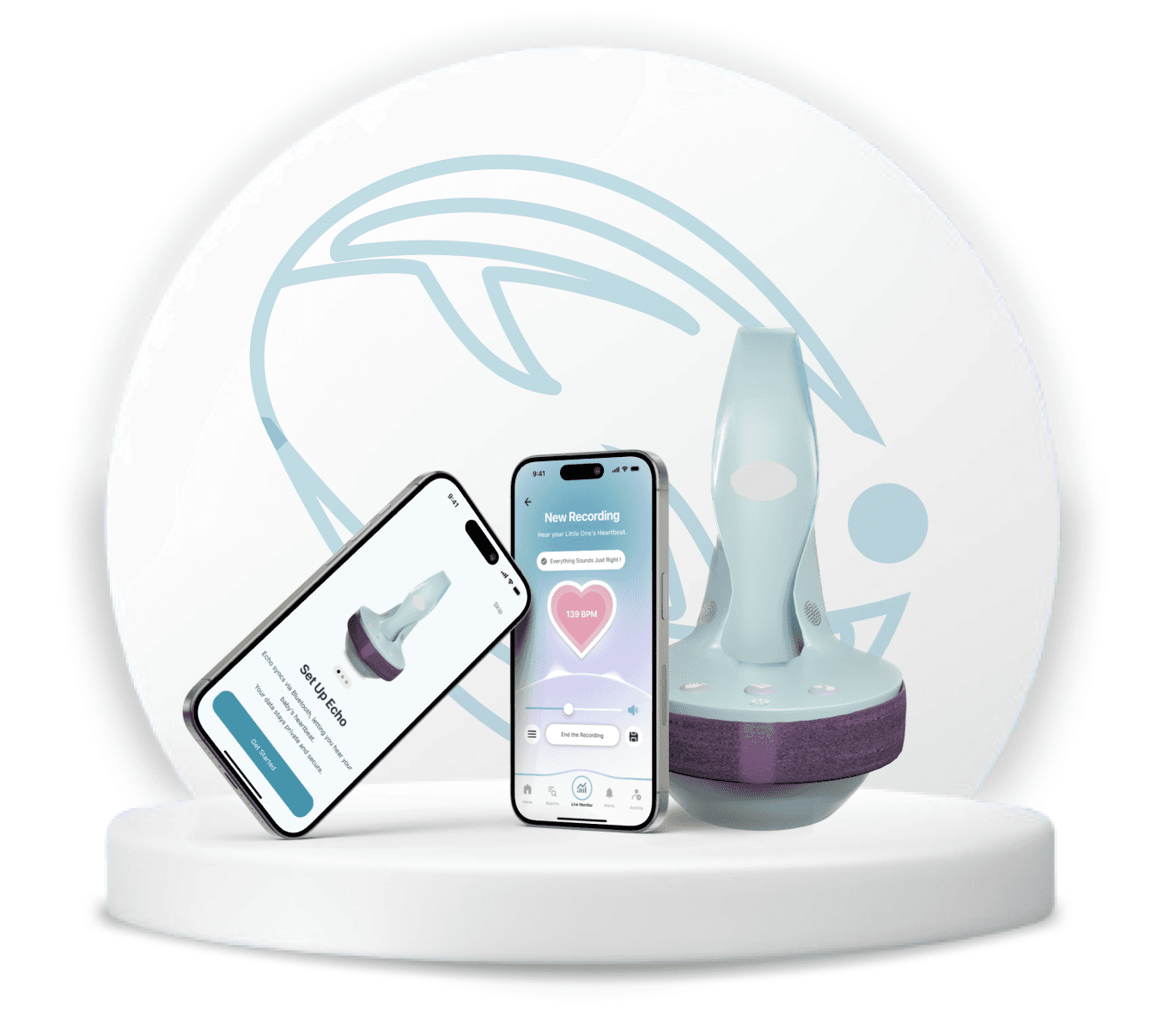
Echo is a maternal health monitoring system for high-risk pregnancies that brings blood pressure, glucose, and fetal heart rate into one at-home experience.
Project Type
Solo+Group Project
Role
Product Designer
Timeline
January 2024- March 2024
Tools
Figma, Miro, Blender
The Challenges Pregnant Women Face
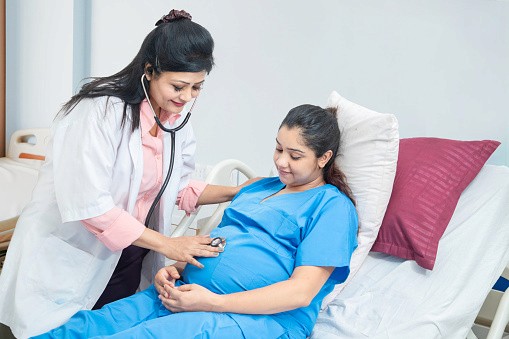
Pregnancy becomes increasingly demanding in the last three months, with rising physical discomfort, emotional stress, and hidden medical risks.
Why Does Risk Increase Later?

Physiological shifts:
Key maternal indicators fluctuate as the body prepares for birth.

Silent complications:
Risks like hypertension or diabetes can emerge without clear symptoms.

Uncertainty :
It’s often hard to know what changes are normal or concerning.

Care gaps:
Regular clinical monitoring isn’t always easily accessible.
The Gap
In late pregnancy, care becomes critical, yet fragmented monitoring increases anxiety when reassurance matters most.

Target Audience :
18-45 years
Fragmented access to blood pressure, glucose, and fetal heart signals increases anxiety and effort for women during the most critical stage of pregnancy.

Solution
One Device. All- In-One Care.
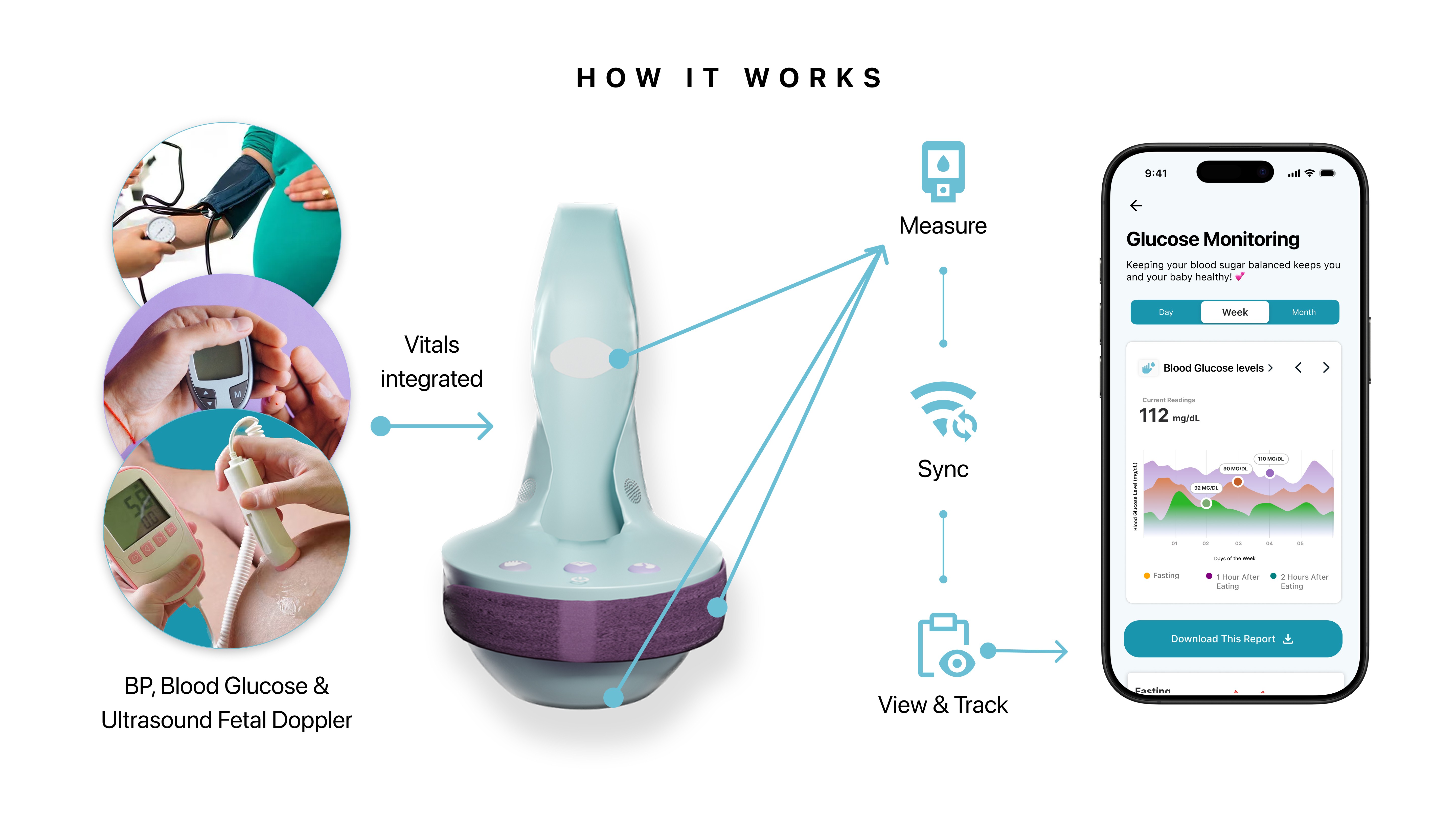
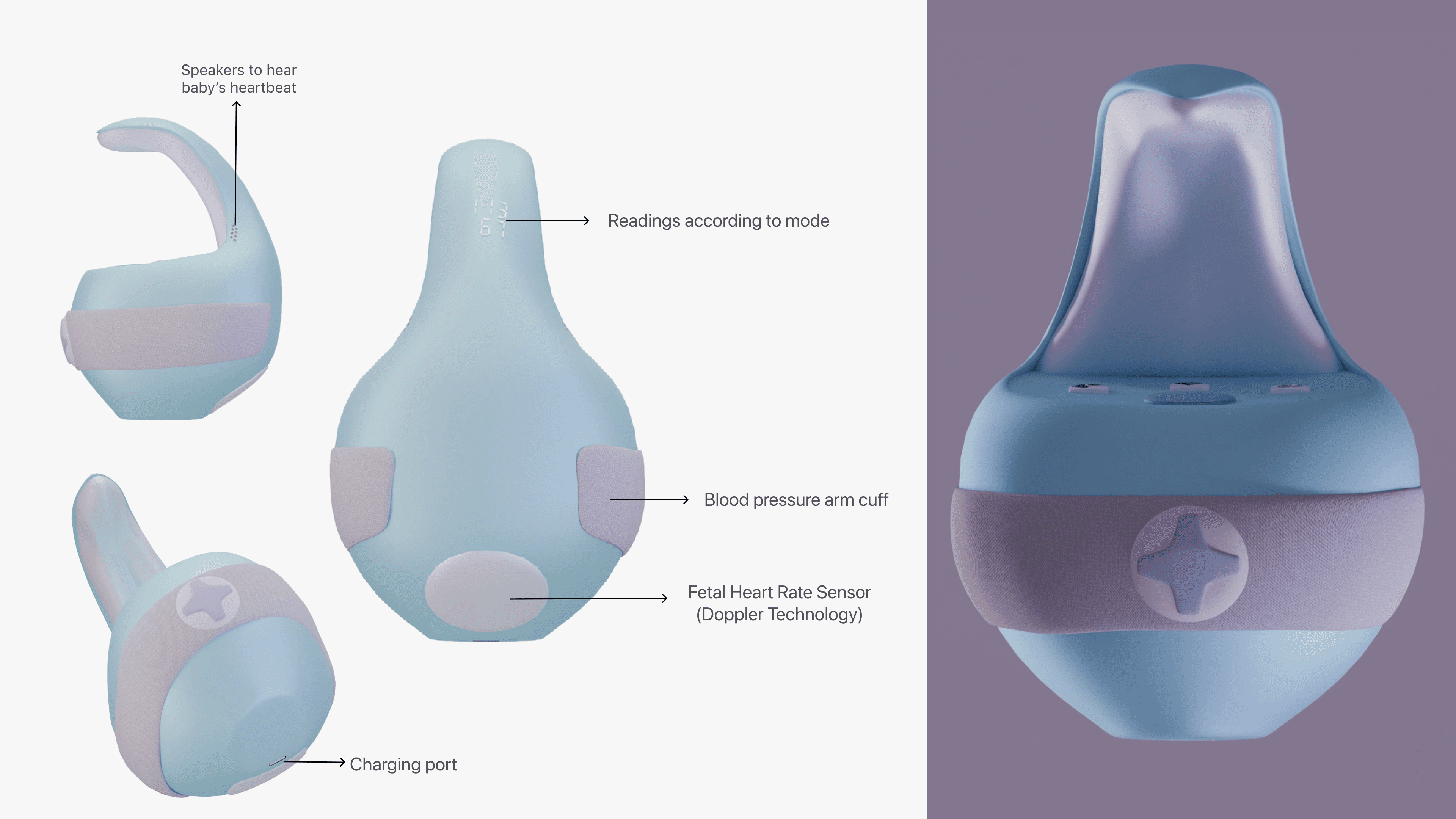
Echo pairs a non-invasive physical device with a mobile app to unify maternal monitoring into one calm experience.
The device captures continuous readings
The app translates data into clear guidance and alerts
Designed to feel reassuring, not clinical
1. Discover
What should we focus on to improve maternal care at home?
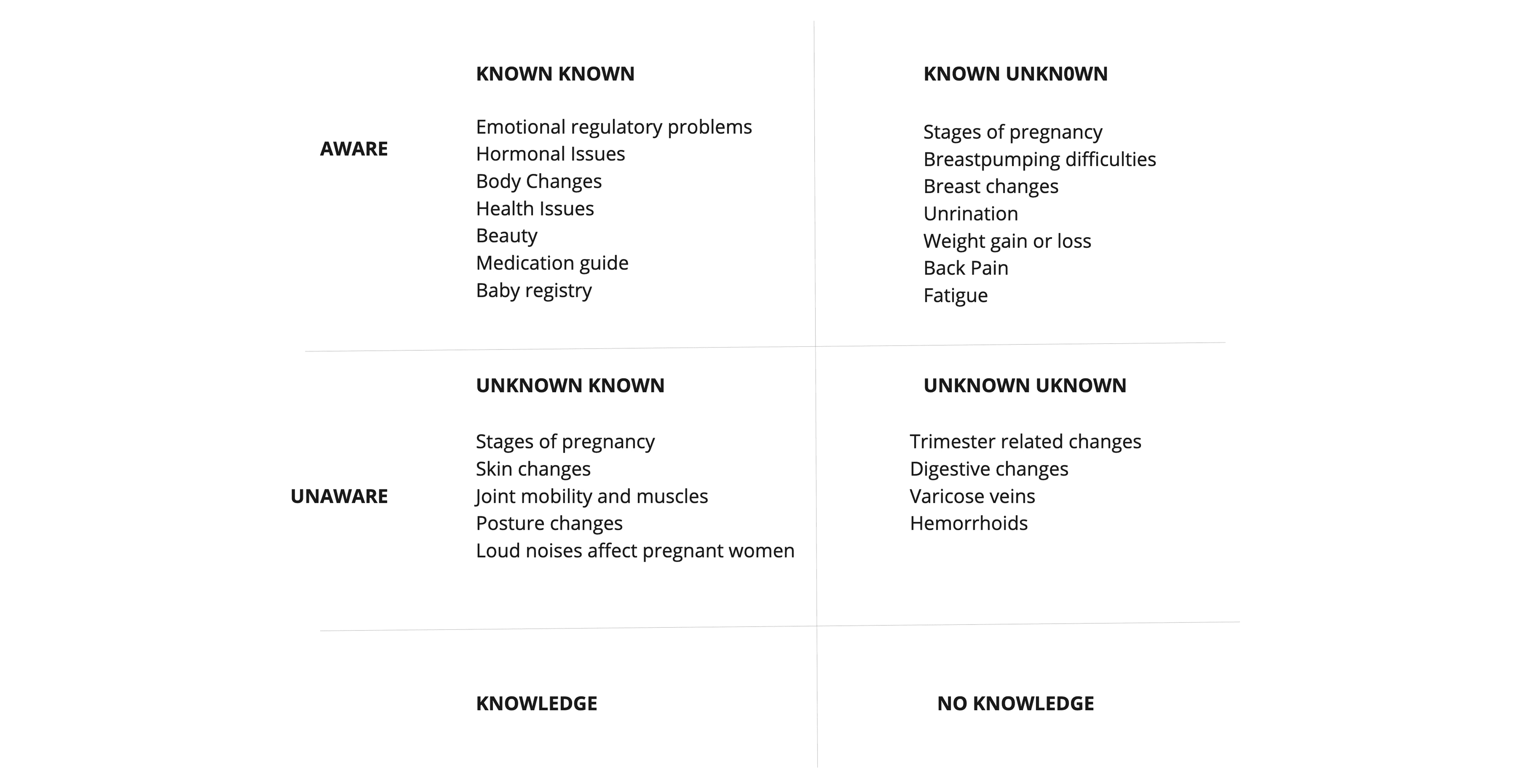
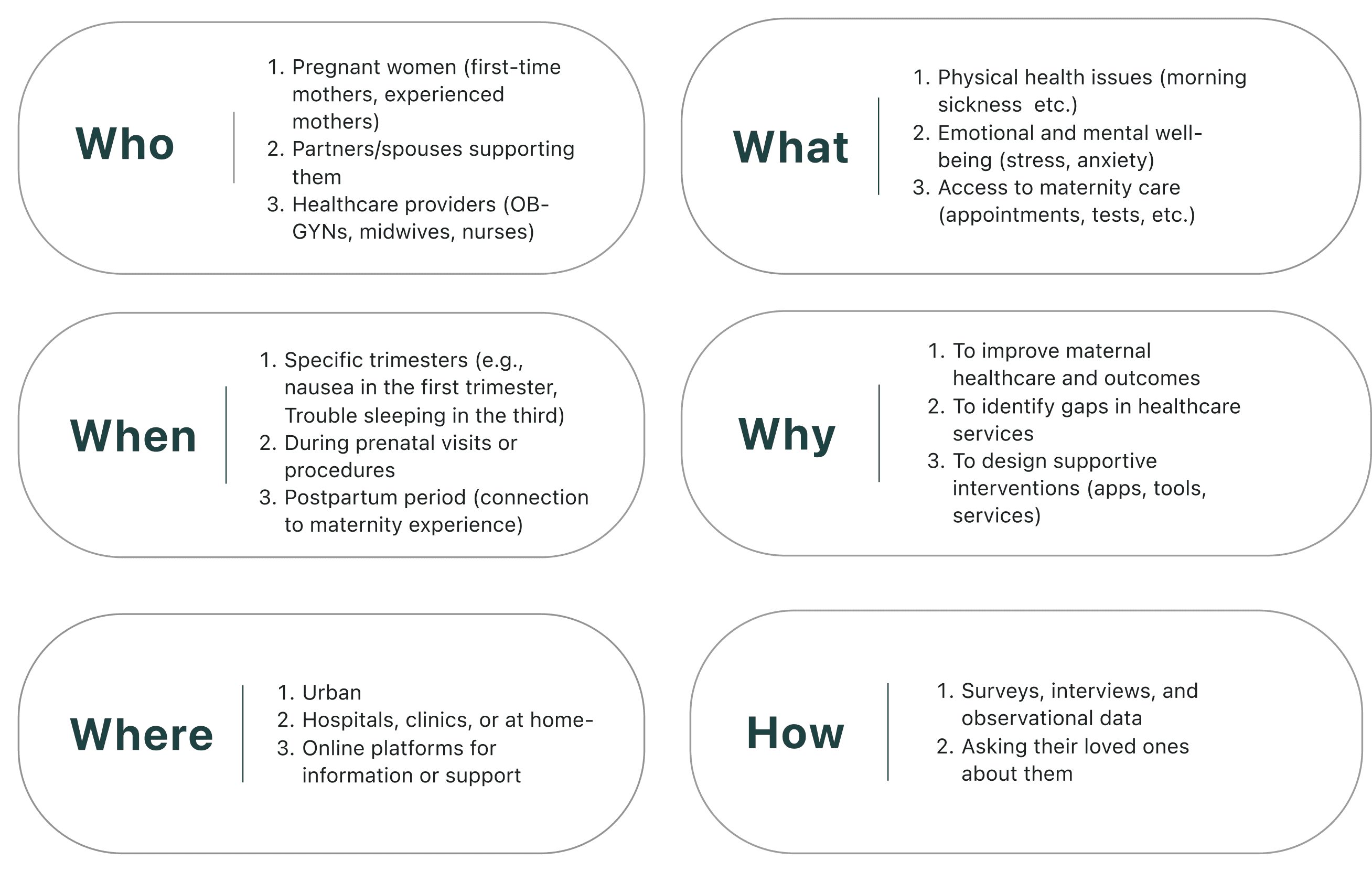

This stage mapped the broader pregnancy experience - beyond symptoms - and helped us enter primary research with clearer questions about real routines and support gaps.
Pregnancy care involves doctors, families, clinics, and caregivers - but support is often disconnected.
The gap between hospital monitoring and home reality became a key design opportunity.

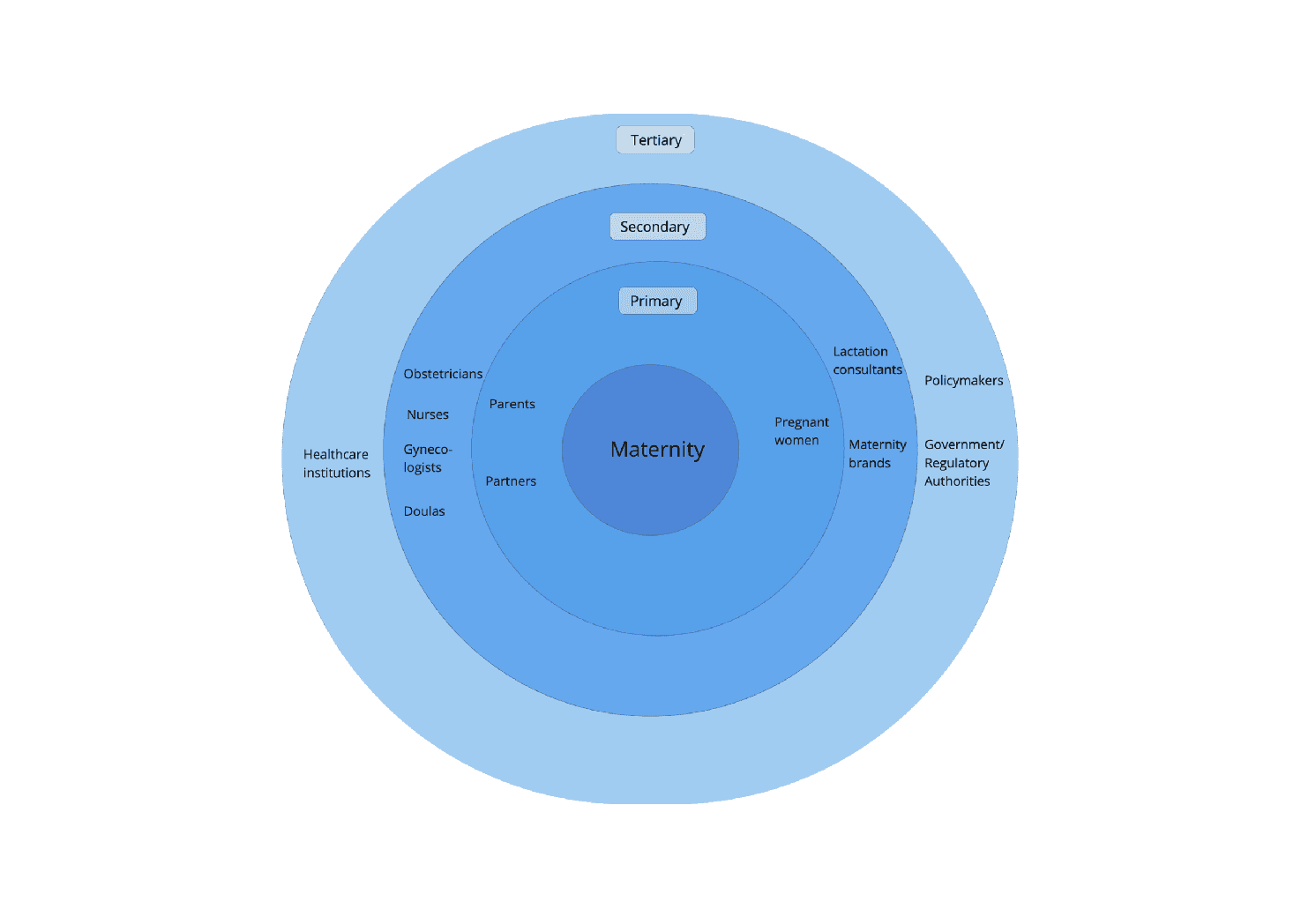
Mapping stakeholders helped us identify who influences care decisions beyond the mother, guiding who we needed to speak to during primary research.
Primary Research

x 7 users

We interviewed 7 women and consulted 4 doctors to understand late-stage pregnancy challenges. Key pain points included fatigue and reduced mobility, sleep discomfort, anxiety and emotional isolation, and complications such as high blood pressure and nausea.
This led us to question whether anxiety stemmed from the risks themselves or the tools used to monitor them, prompting a competitive analysis.
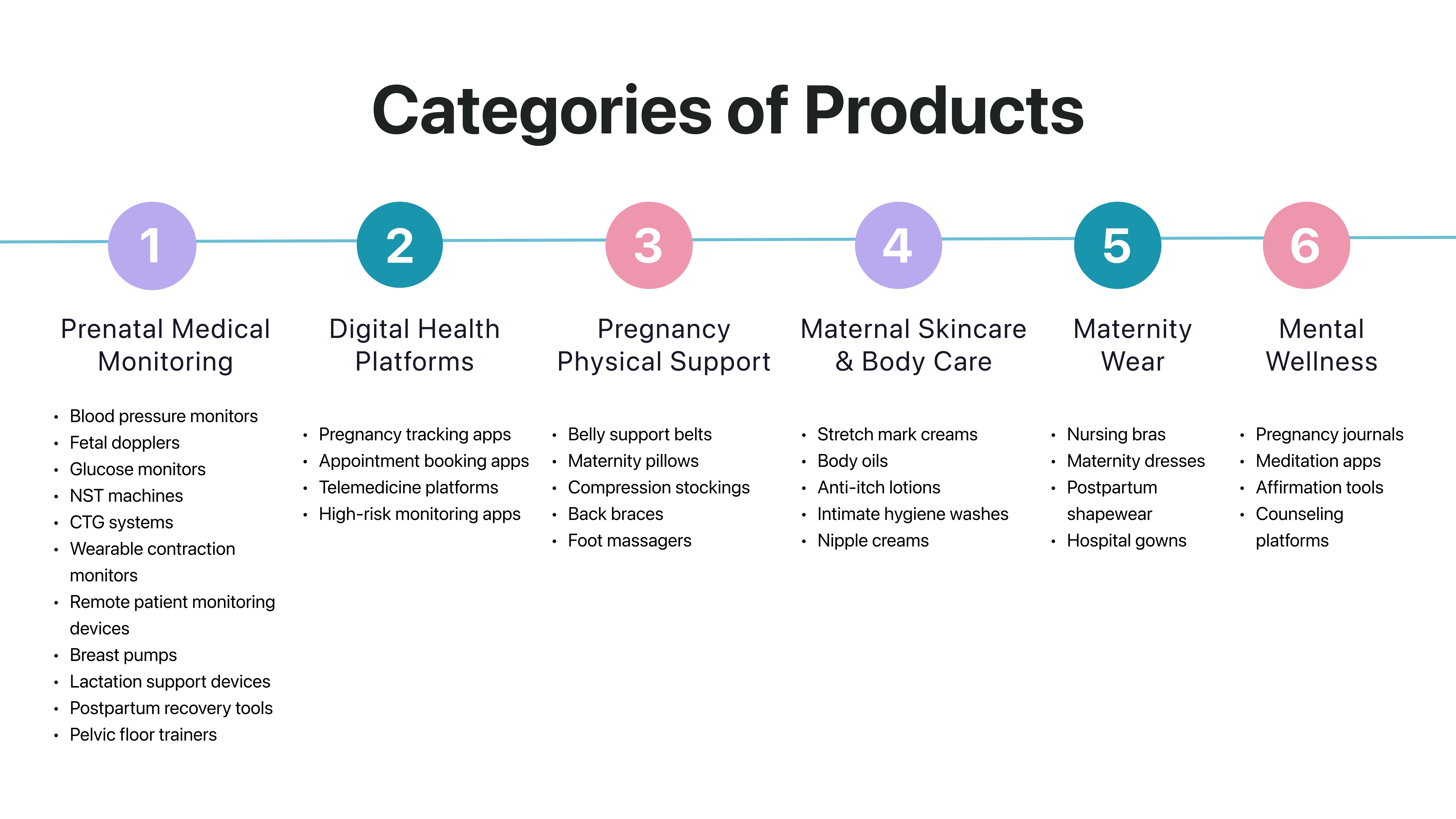
Most existing solutions are single-purpose or clinic-bound. We learned that impact in maternal health depends less on features and more on trust, simplicity, and integrated care.
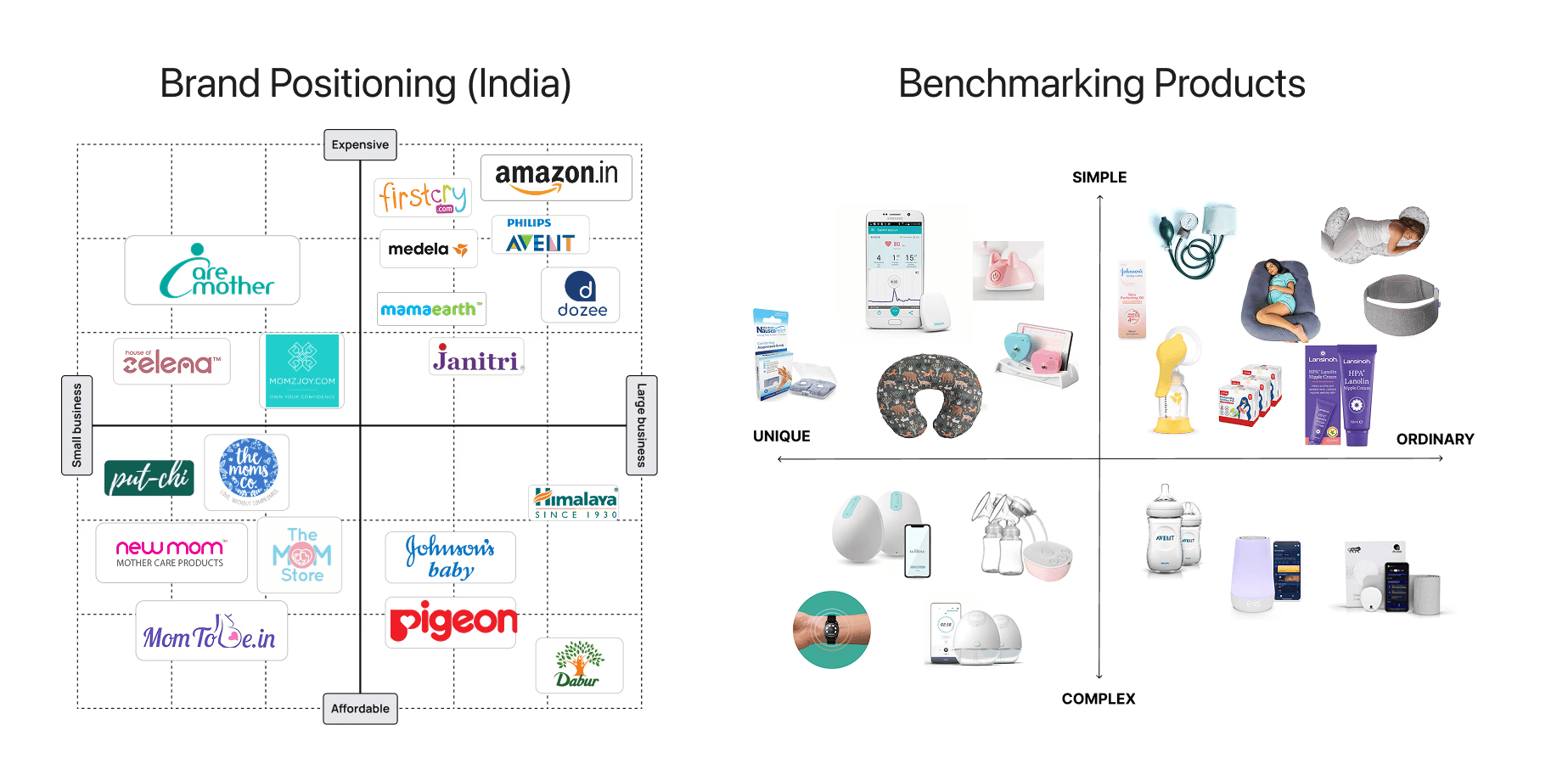
With too many overlapping needs and no clear priority, we used card sorting to make sense of what mattered most.
User & Expert Insights
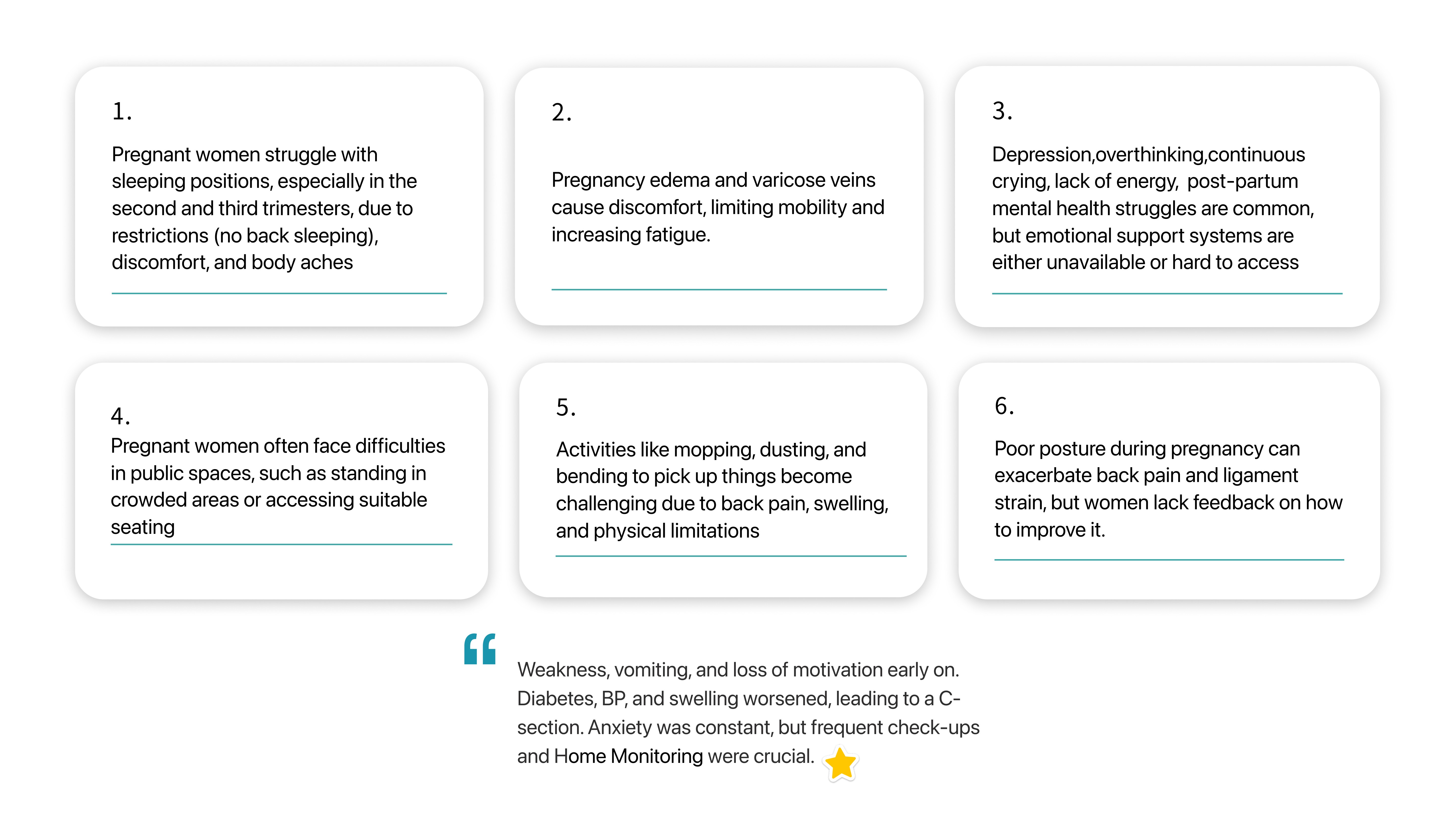
Interviews showed that concerns consistently overlap with anxiety. Blood pressure emerged as a major emotional trigger once women are labeled “high-risk.”
Through interviews, blood pressure repeatedly clustered with anxiety, indicating it was not just a medical task but an emotionally loaded experience for many women.
Key Patterns
The analysis helped validate early assumptions and highlighted blood pressure monitoring as a high-impact focus for further expert review.
Defining the Problem
User Context:
Women classified as high-risk in the third trimester experience increased medical supervision and frequent monitoring of vitals such as blood pressure and glucose.
Current Gap:
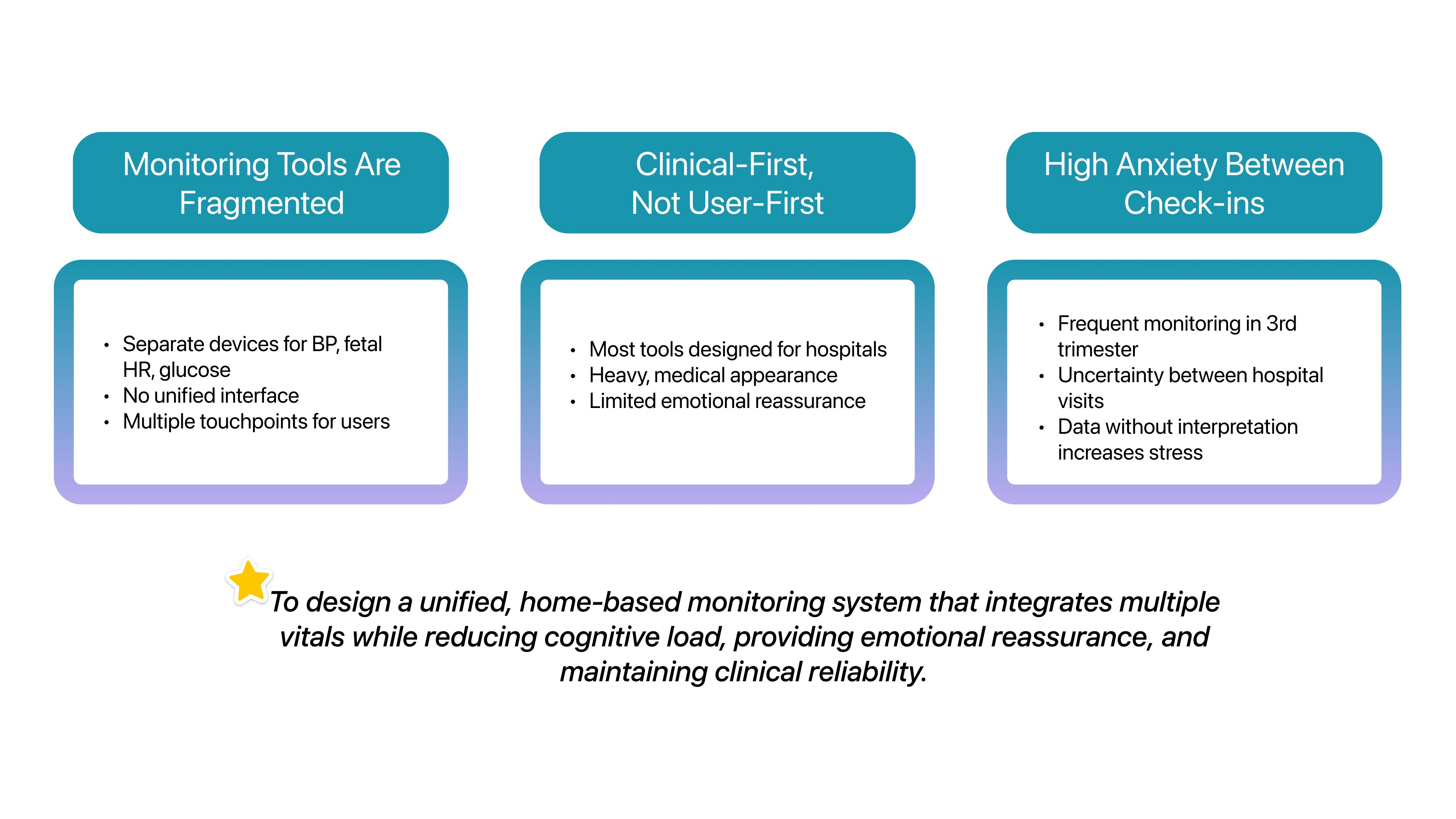
Existing monitoring tools are fragmented and metric-focused, requiring multiple devices and interactions without providing emotional reassurance.
System Tension:
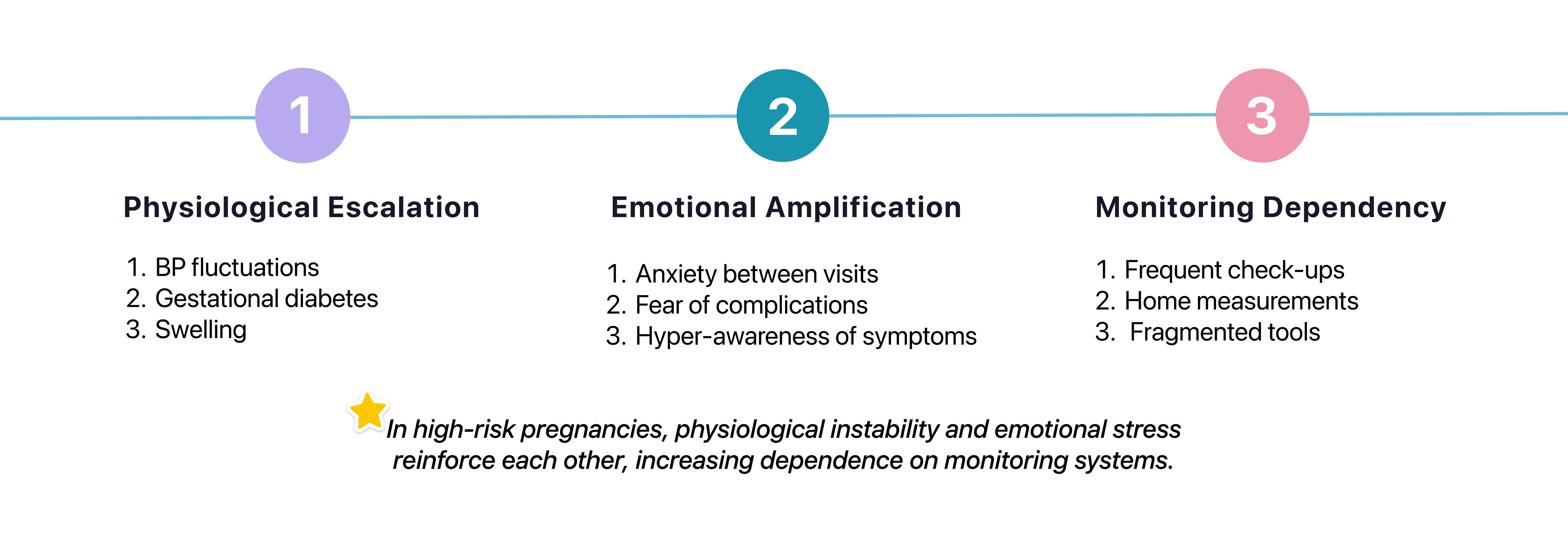
Physiological instability (e.g., hypertension, diabetes) heightens anxiety, while emotional stress can further impact physical indicators, creating a reinforcing cycle.
Core Problem:
Current systems effectively collect clinical data but fail to reduce cognitive load and emotional stress for high-risk mothers navigating continuous monitoring.
Stress wasn’t just the condition, but the constant monitoring - prompting me to explore how key third-trimester vitals connect to chronic risks.
2. Empathize:
Understanding user needs and pain points
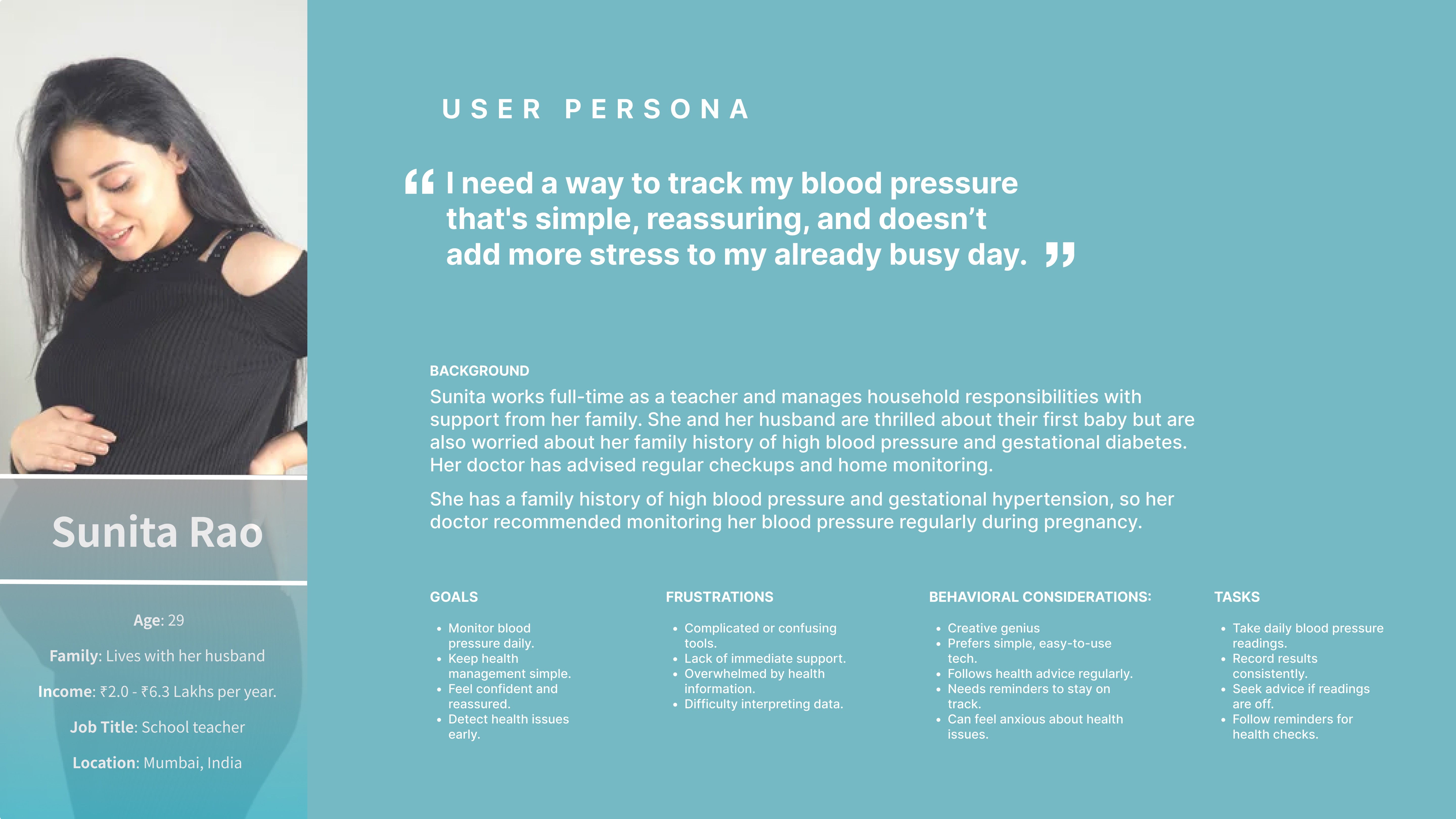
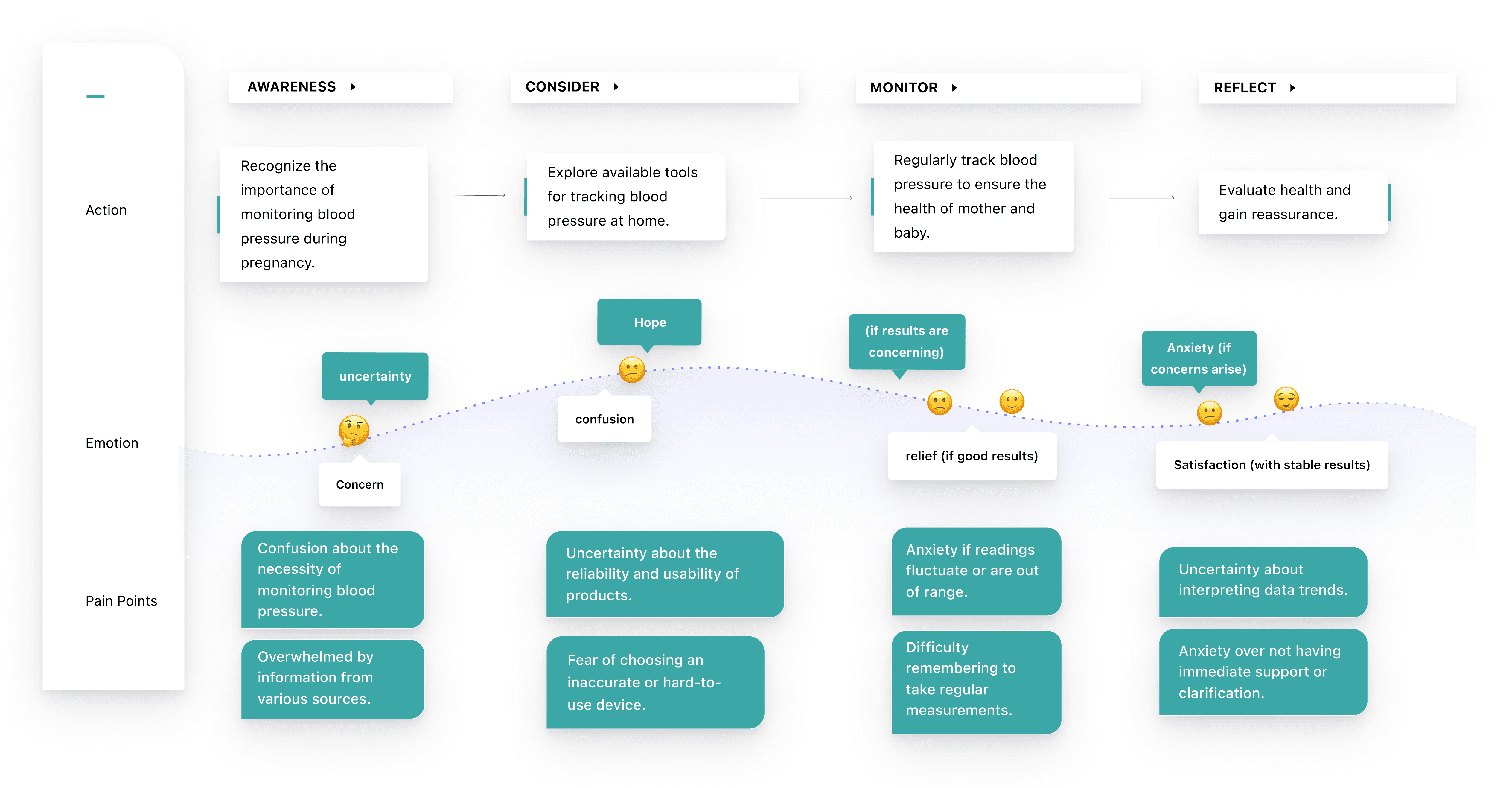
How might we help women in late-stage, high-risk pregnancies feel confident and reassured about their health between clinical check-ins?
3. Ideate :
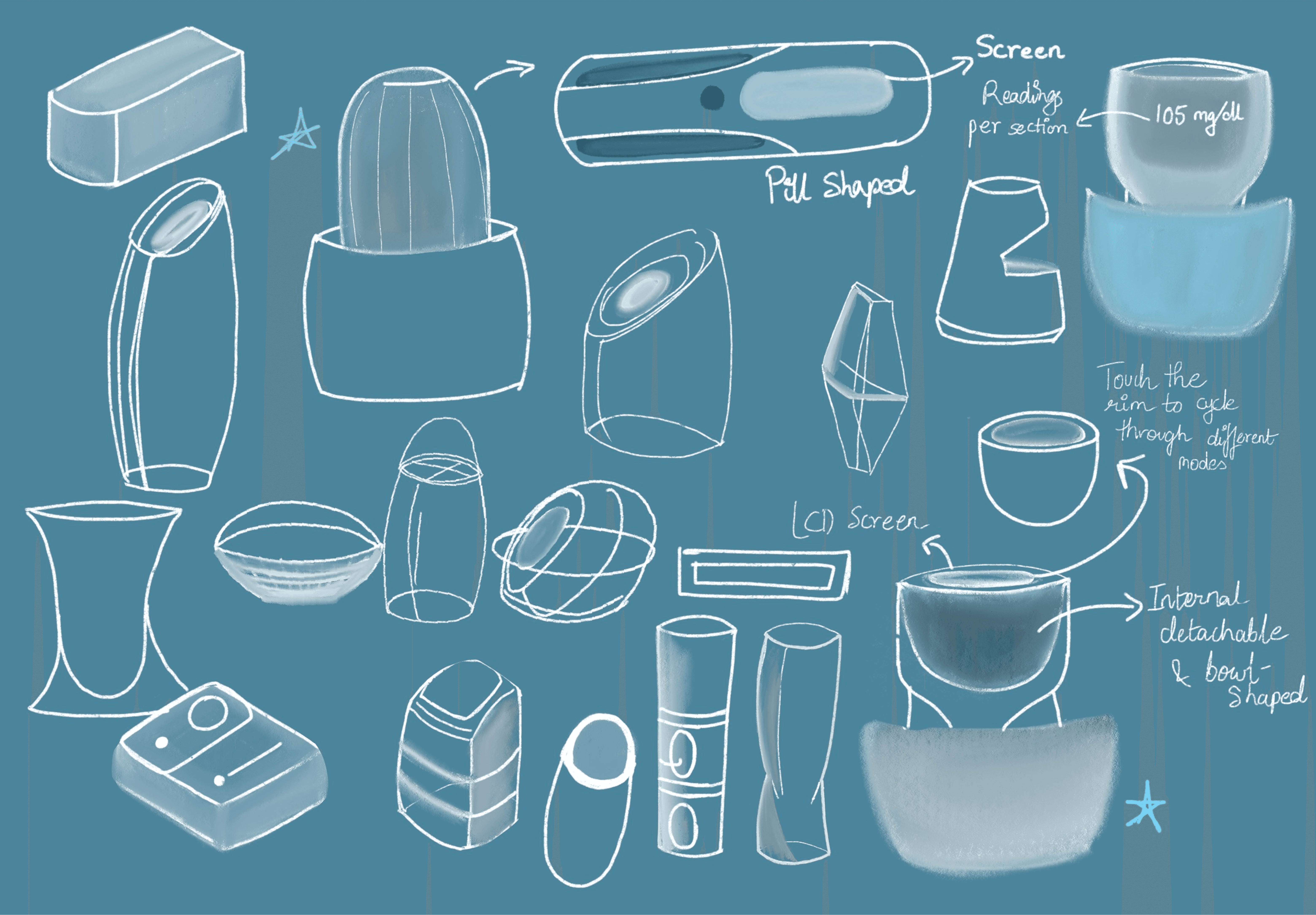
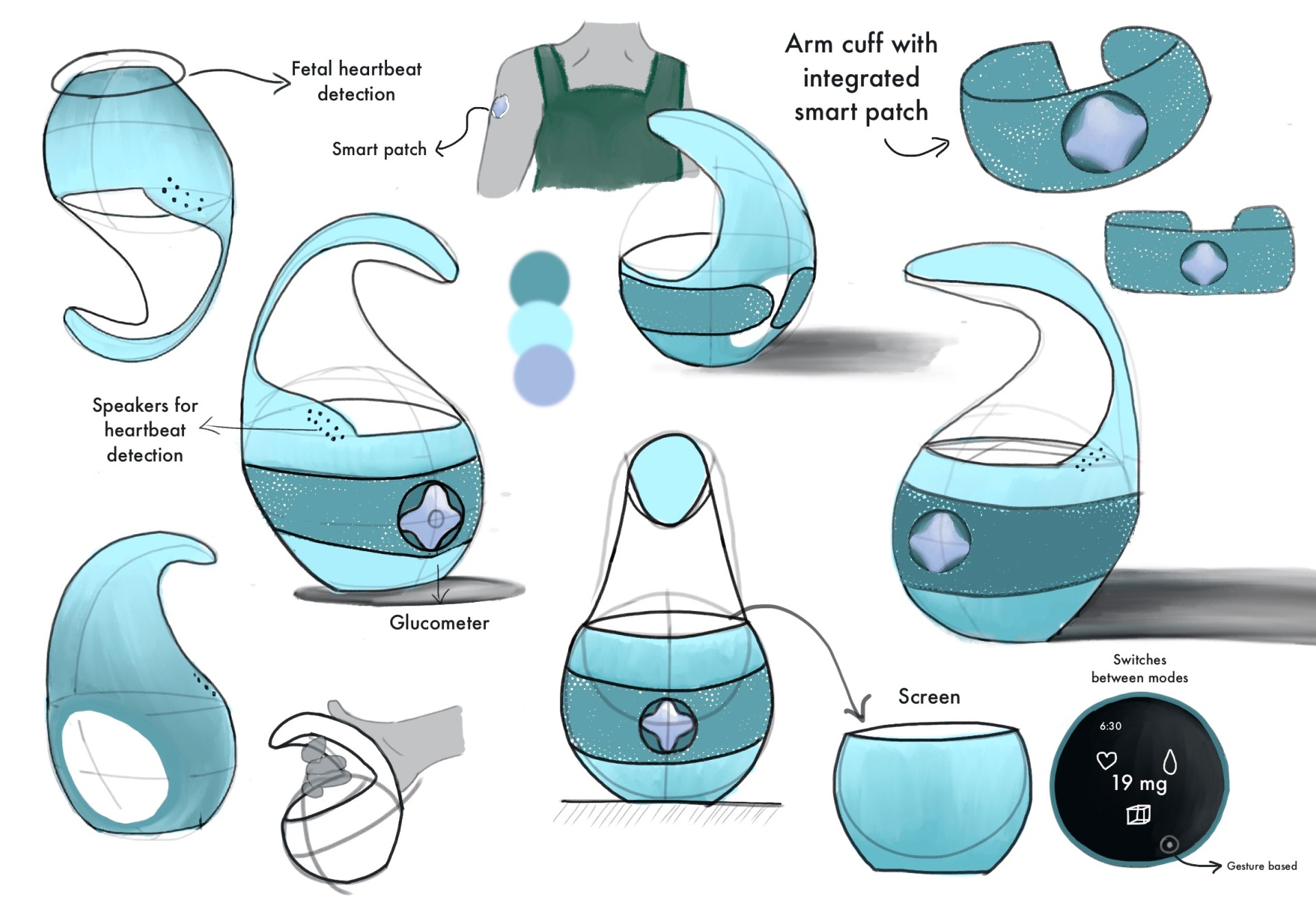
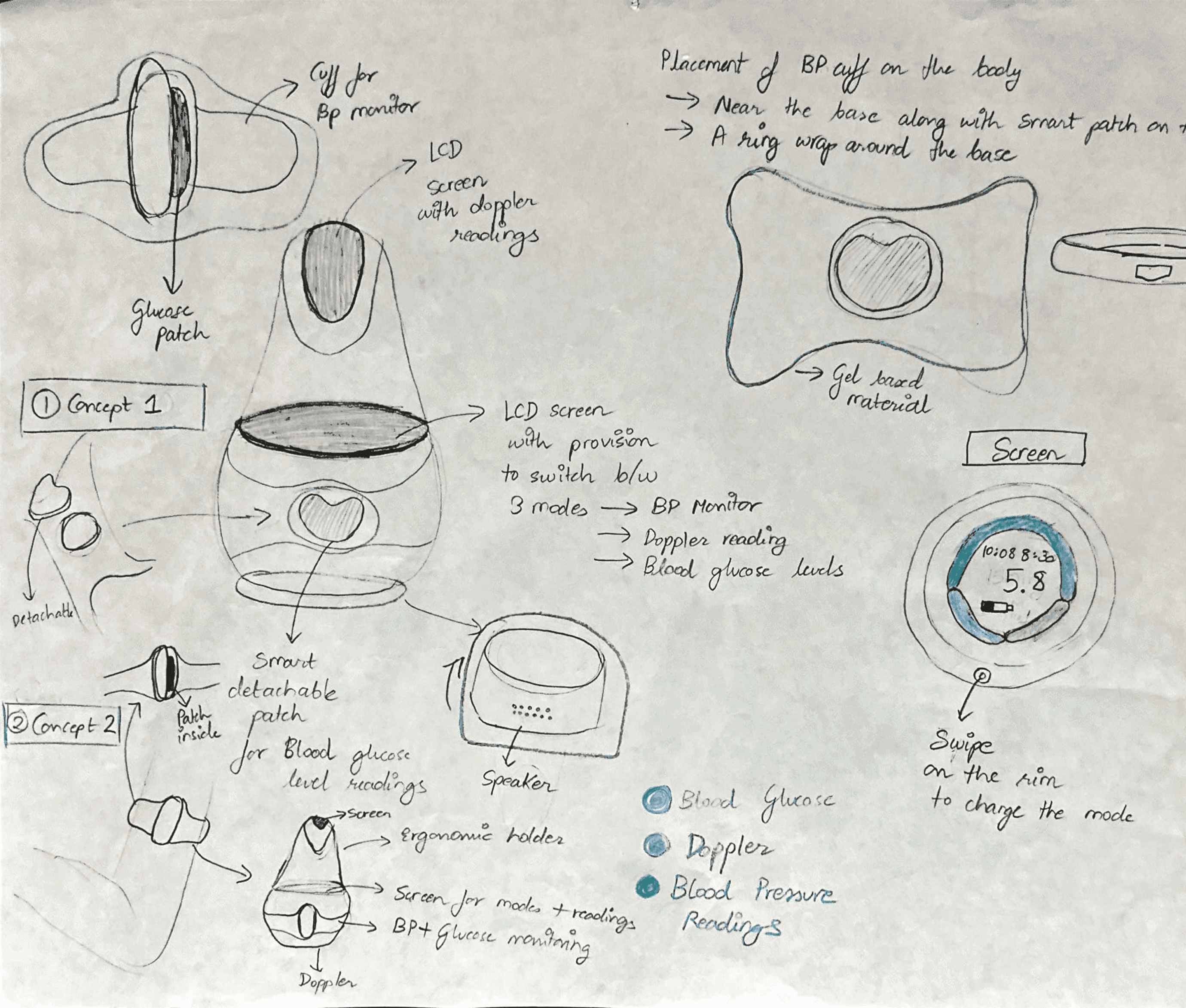
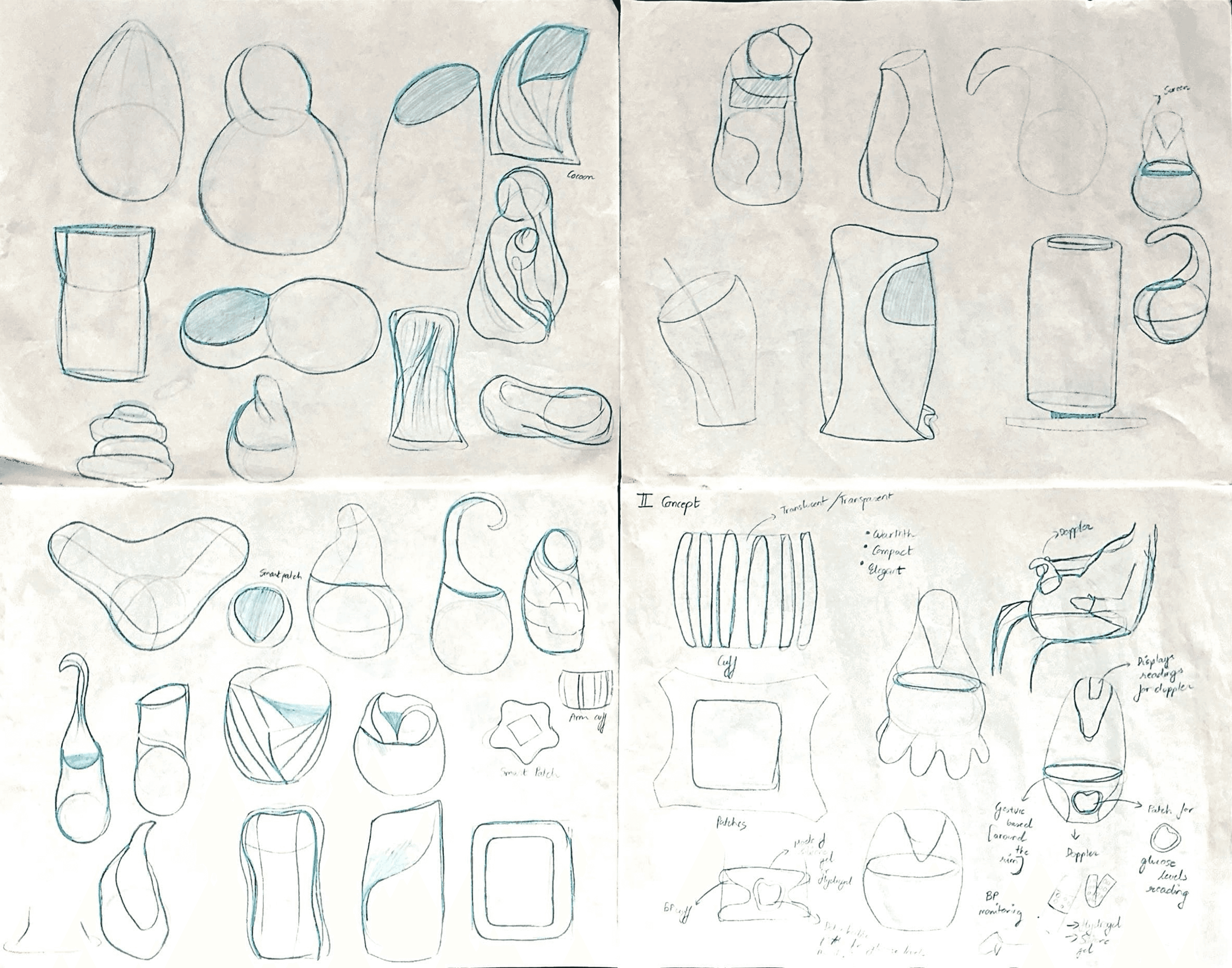
Designing solutions that simplify user interactions and enhance overall experience.
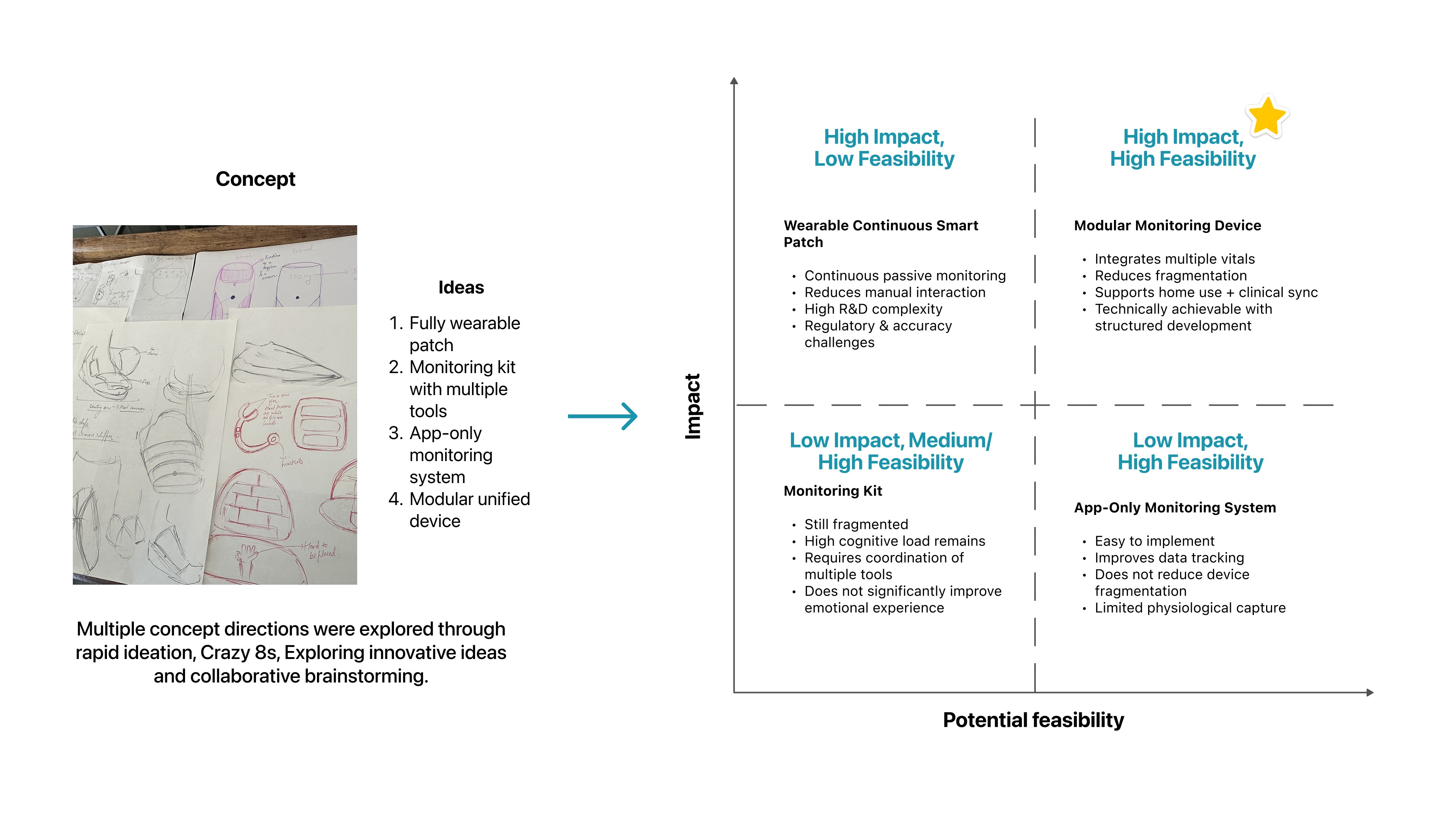
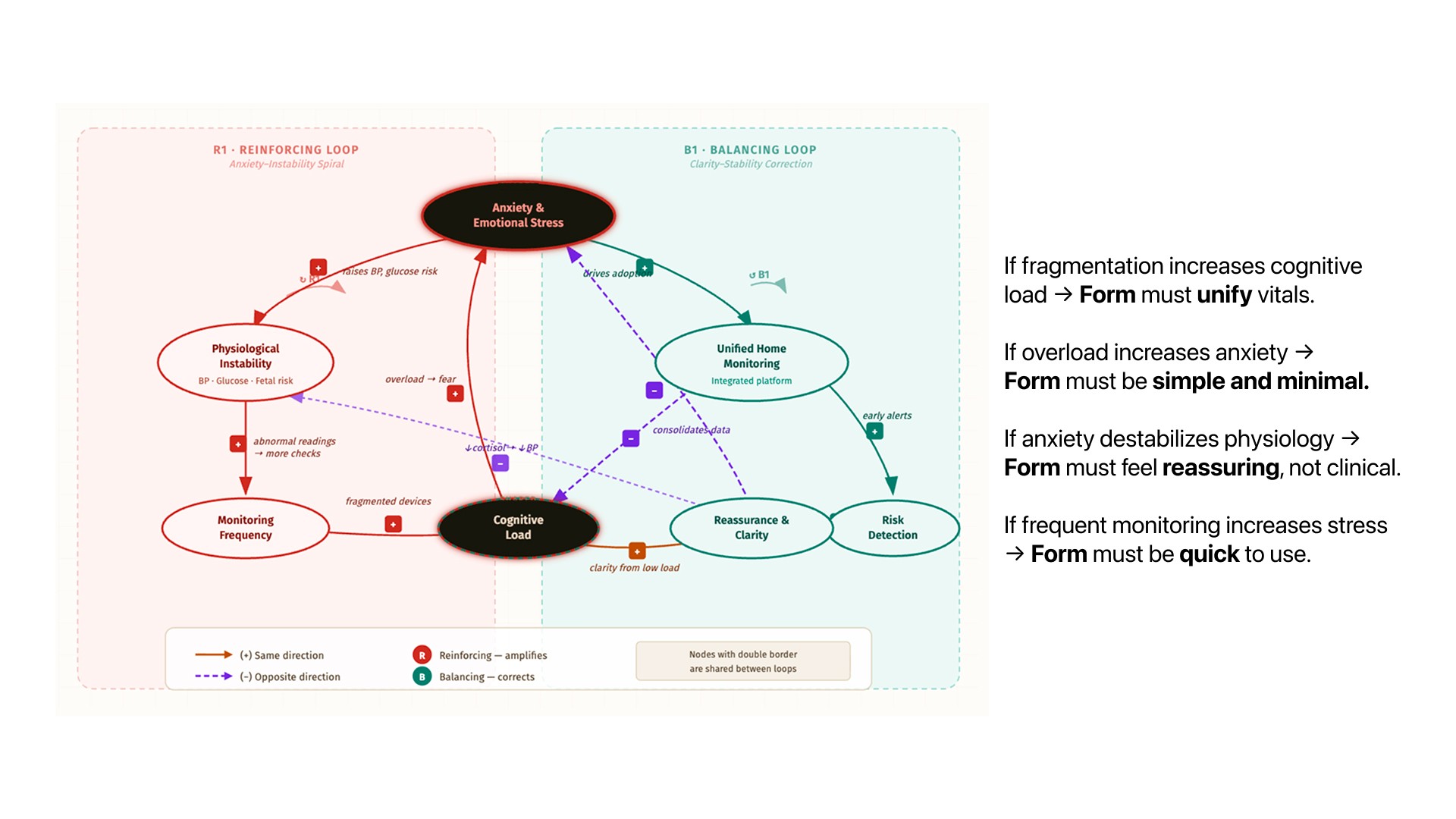
Sketching Ideas
4. Prototype
The prototype adds clarity and ease to the monitoring experience.
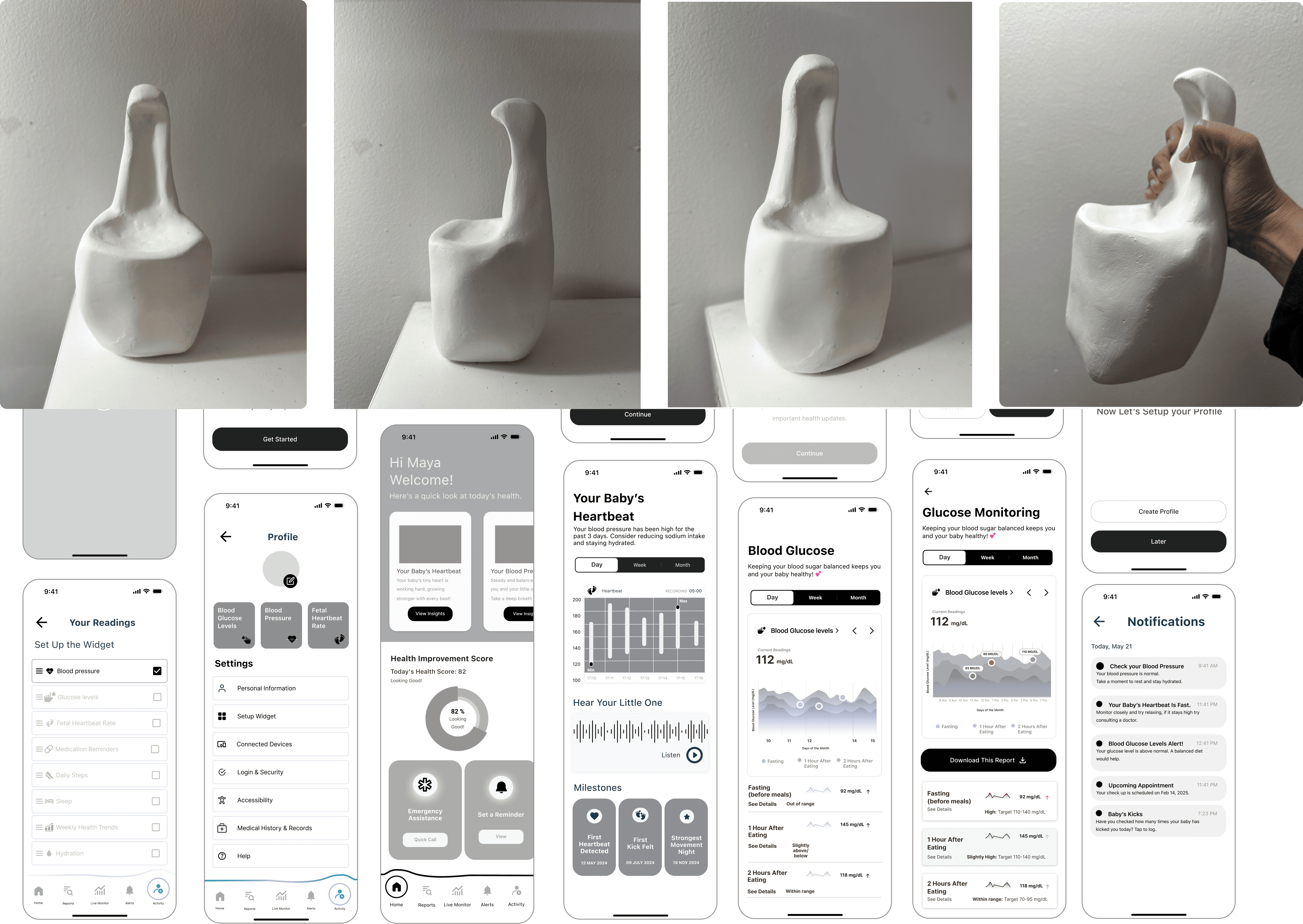
Lo-Fi Wireframes
Wireframes focused on readability and calm alerts, while physical testing ensured comfort during late-stage fatigue.
Visual style
I chose the primary colour as blue since it is associated with calmness, trust, and reliability, which are essential for pregnant women monitoring their health.
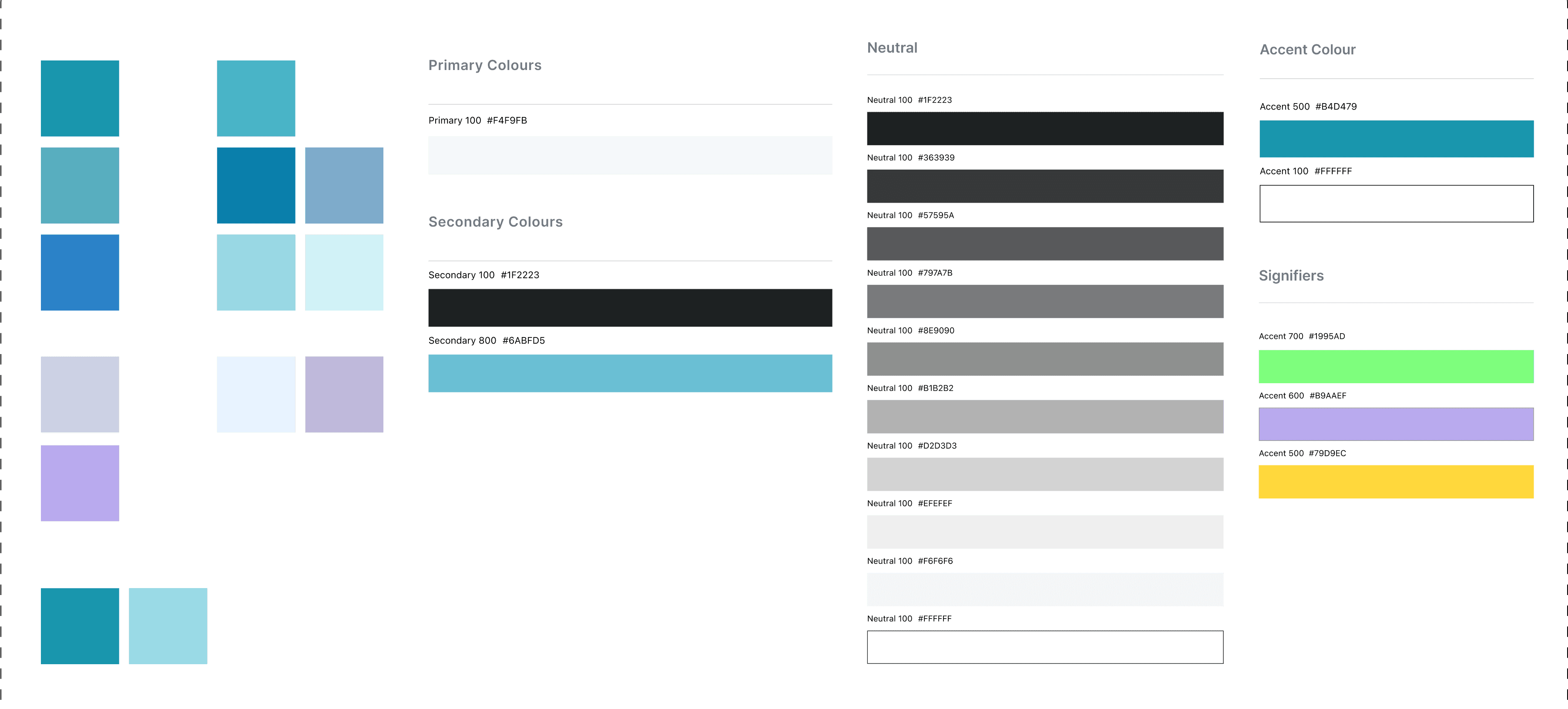
Design system

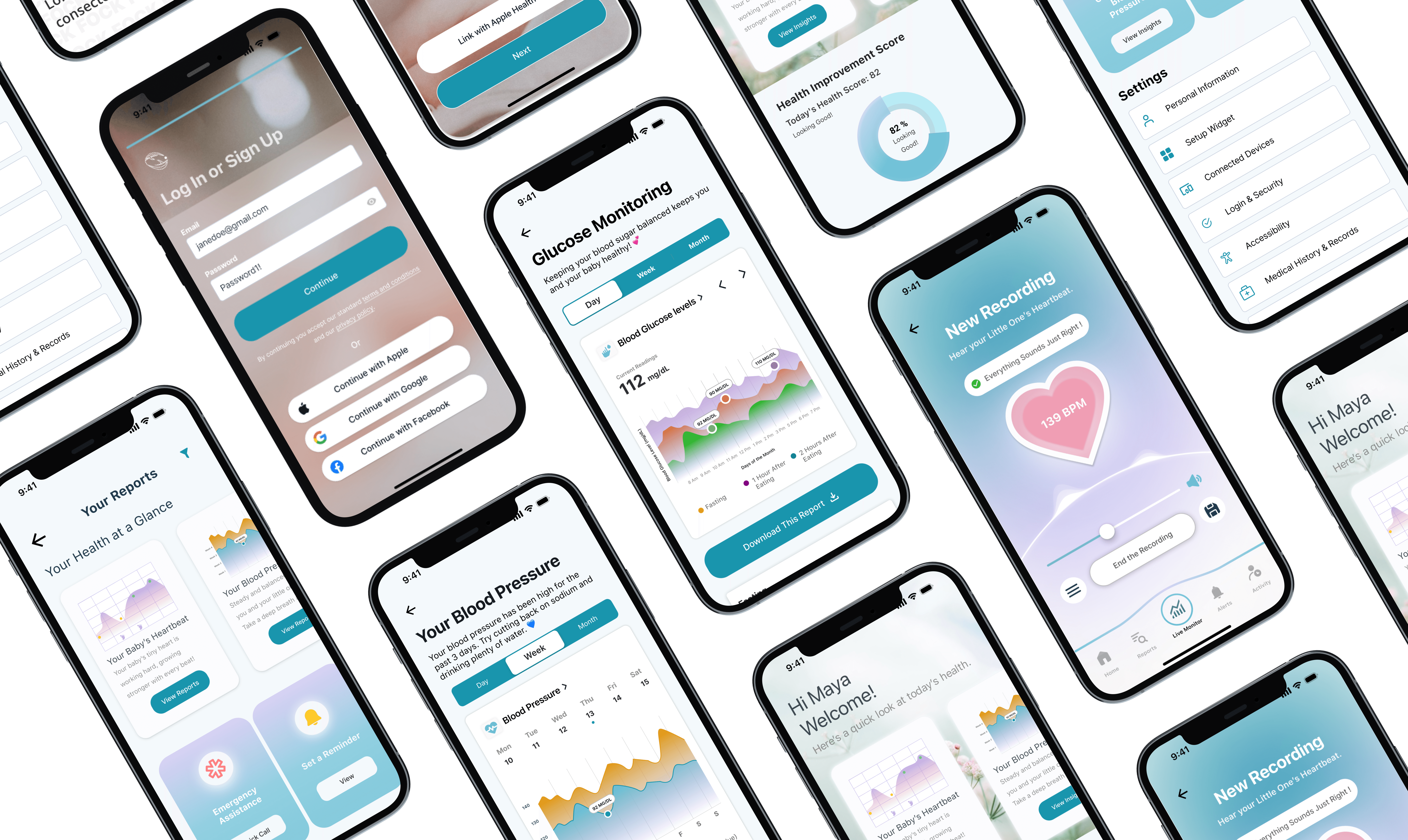
Testing With Users
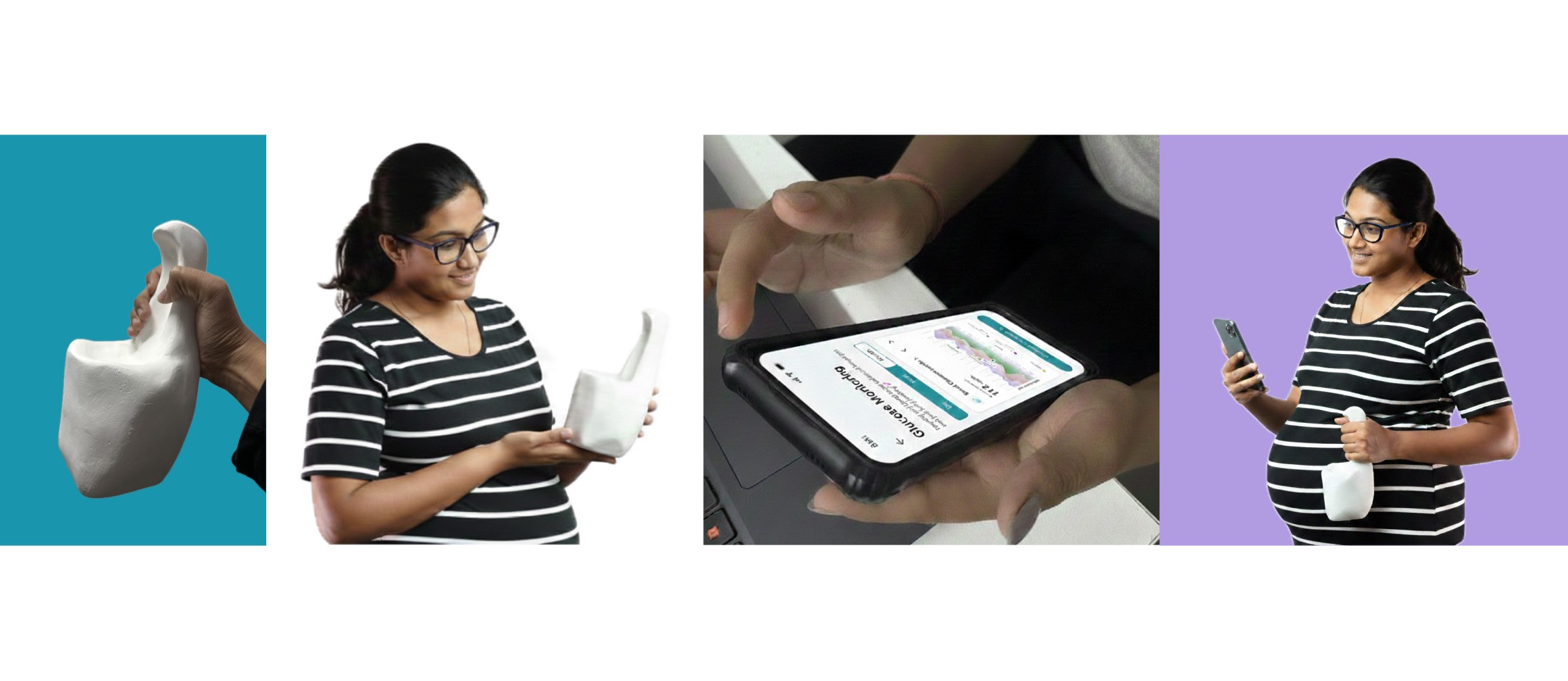
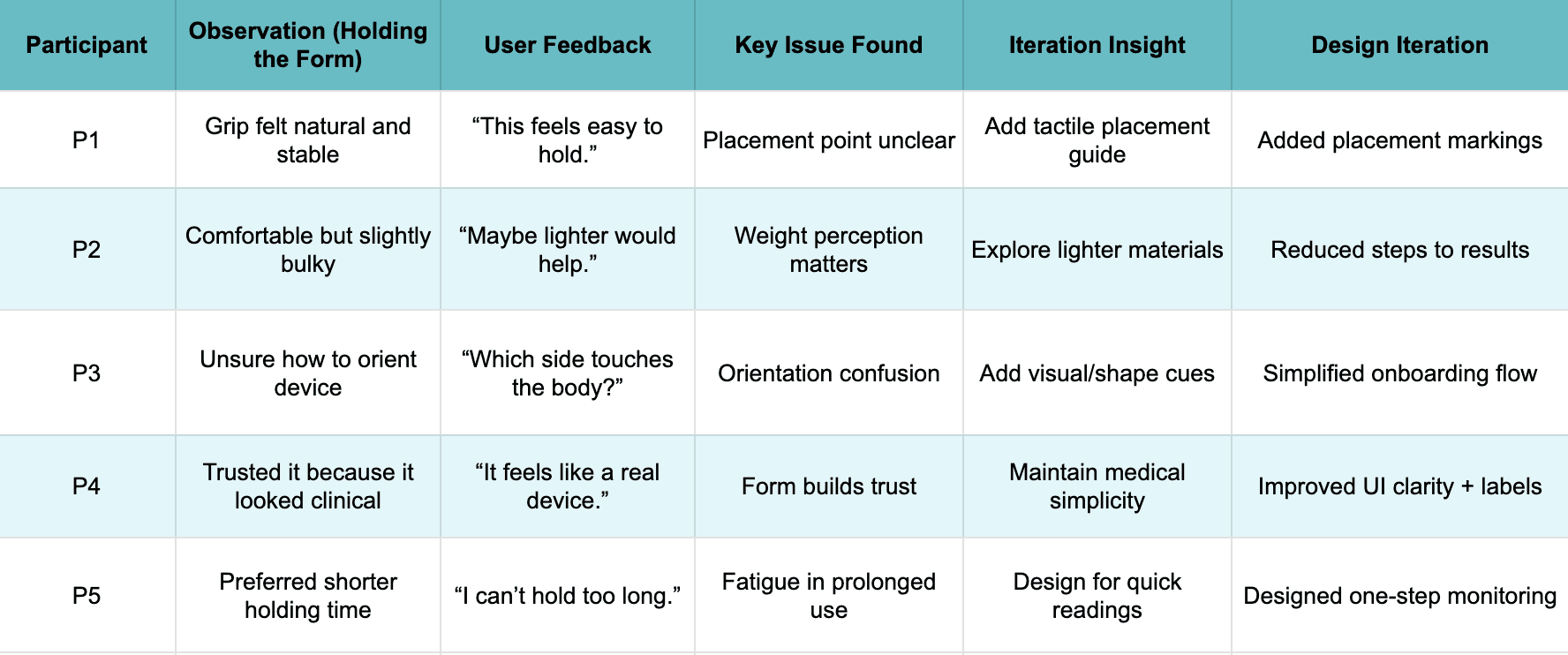
I tested Echo’s early physical form using a low-fidelity foam prototype to evaluate grip comfort, handling, and placement intuitiveness during late-stage pregnancy use.
Documenting Usability
Reflection and Next Steps
Final Design Iterations
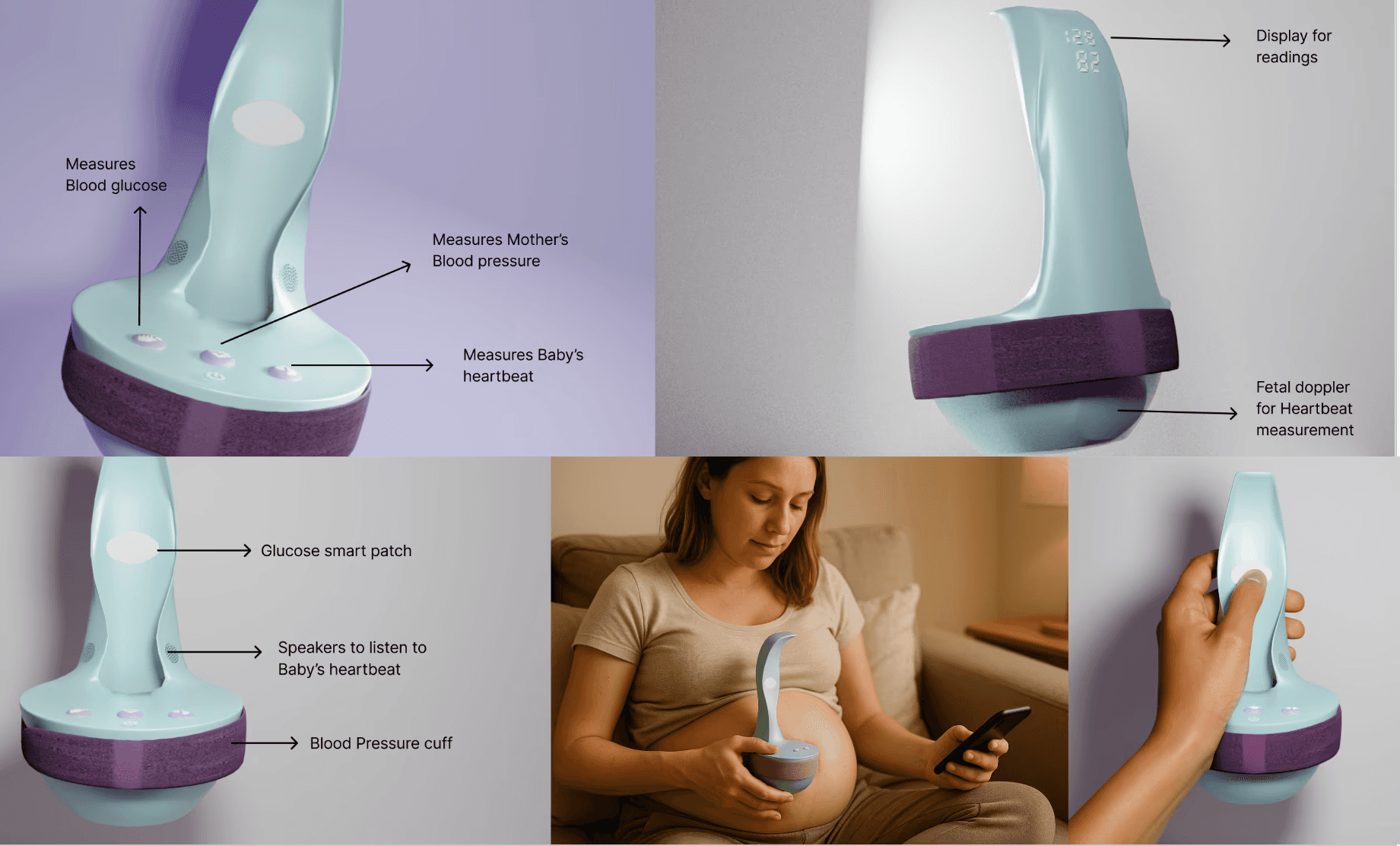
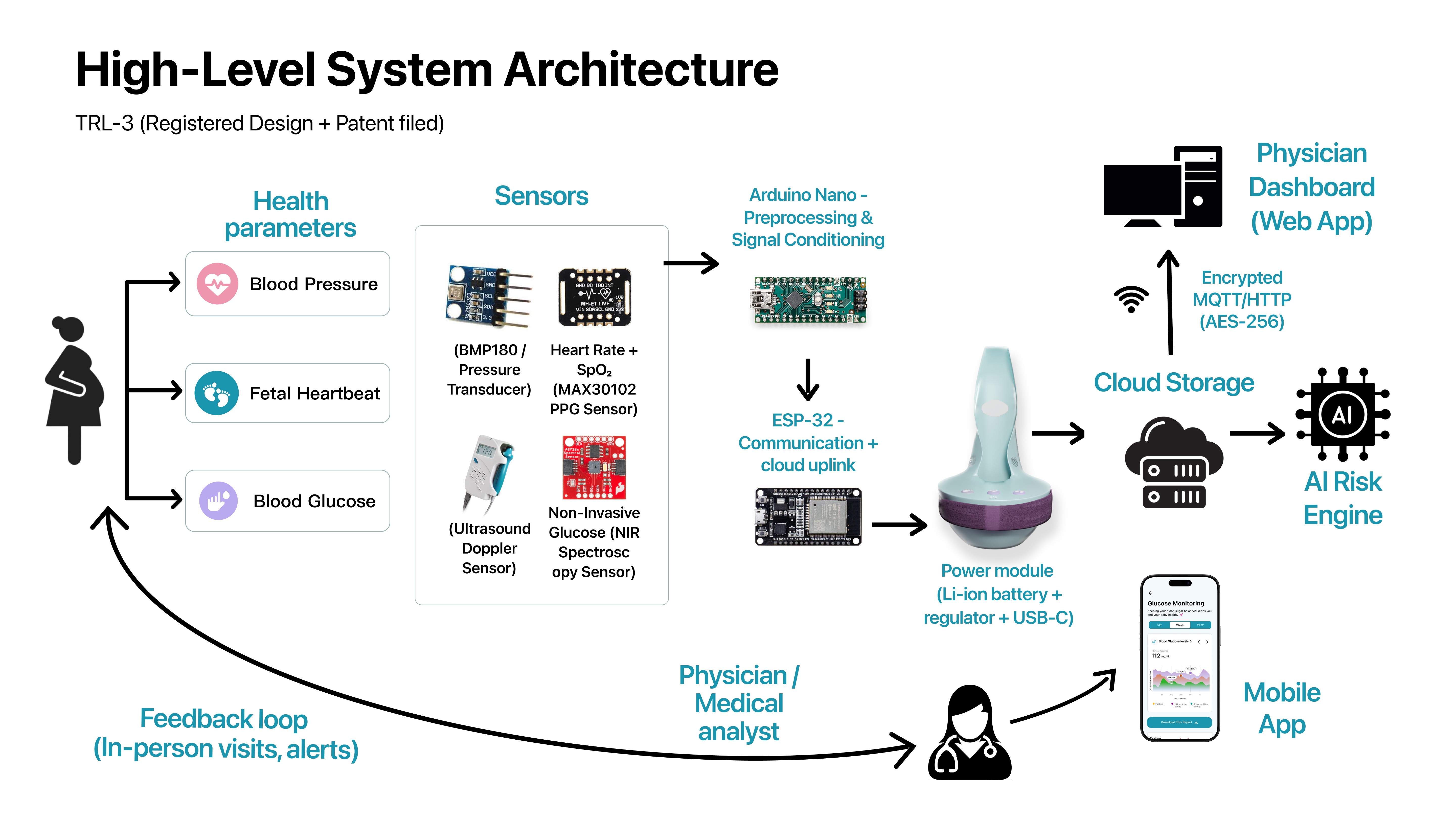
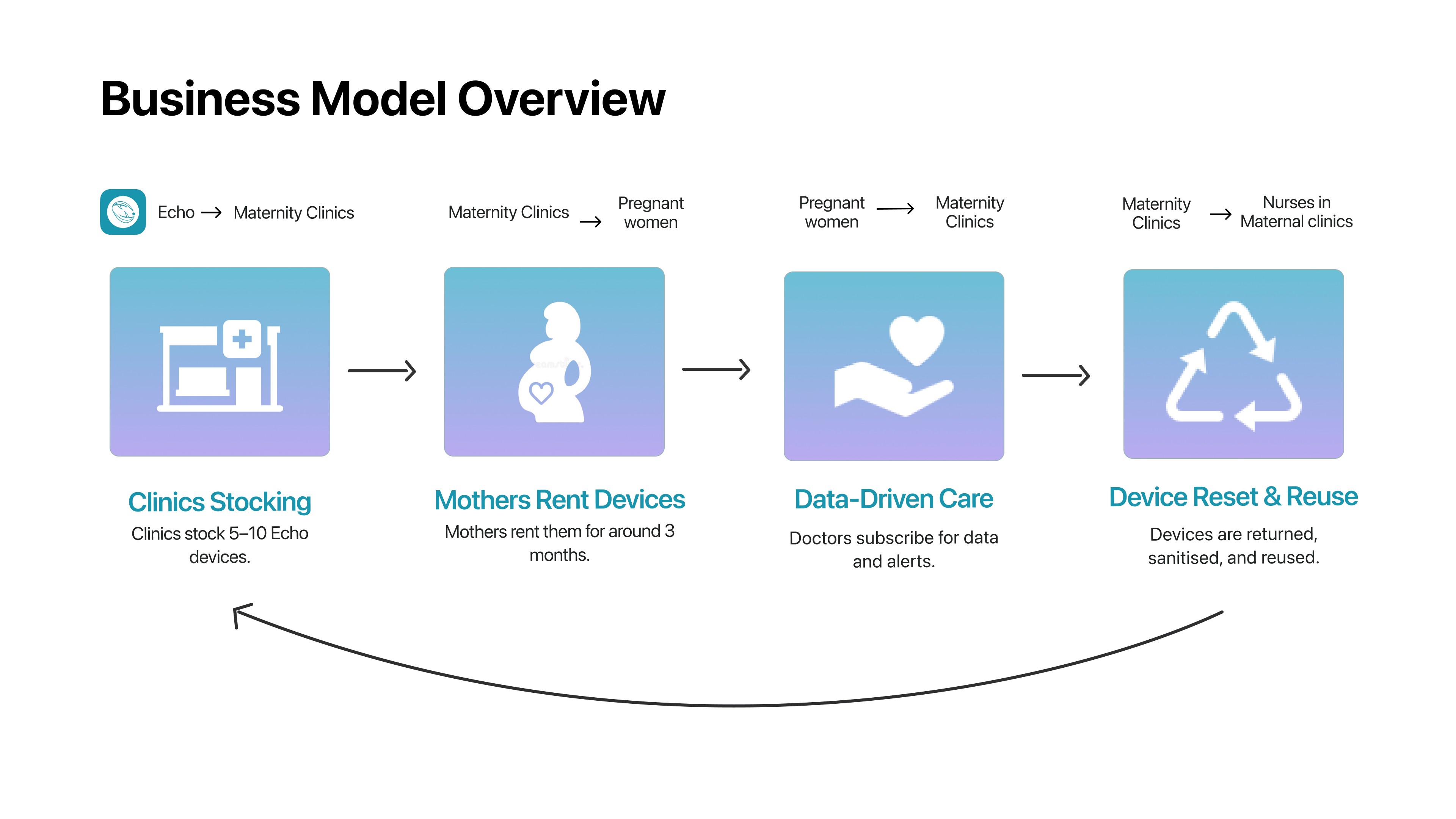
Echo tracks three key vitals through one device, sending data to the cloud and into a shared app for mothers and doctors, with alerts for timely action. Clinics can deploy it for third-trimester use, then reset and reuse devices for other patients.
What i Learned :
Learned the importance of prioritizing user comfort and real-life challenges in pregnancy.
Understood how low-tech and high-tech solutions can complement each other in user experience.
Realized the value of visualizing ideas and user journeys to make design decisions clearer.
Next Steps:
Test the prototype with real users to gather feedback and refine interactions.
Explore additional low-tech and high-tech combinations for broader accessibility.
Develop a more detailed design system to maintain consistency across all touchpoints.